
Climate change made this year’s snow drought in the Western U.S. four times more likely, new Colorado School of Mines study finds
GOLDEN, Colo., July 21, 2026 (GLOBE NEWSWIRE) -- The severe snow drought that gripped the western United States in this past winter was made four times more likely by human-caused climate change, according to a new study led by researchers at Colorado School of Mines and published July 20, 2026 in the Proceedings of the National Academy of Sciences (PNAS).
In the Upper Colorado River Basin, a critical source of water for millions of people across the southwestern U.S., the study found that the snow drought was approximately 14 times more likely because of climate change.
The study is among the first to apply modern climate attribution techniques to a large-scale snow drought event, quantifying the extent to which warming temperatures have increased the likelihood of dramatically reduced snowpack across the American West.
Researchers found that low snow conditions as severe as those observed in mid-March 2026 were approximately 4.4 times more likely to occur in today’s climate than they would have been between 1850 to 1900.
“Our analysis shows that the 2026 snow drought was not simply bad luck,” said Adrienne Marshall, assistant professor in the Department of Geology and Geological Engineering at Colorado School of Mines and lead author of the study. “Human-caused warming substantially increased the likelihood of this event, particularly in the Colorado River headwaters that supply water to communities, agriculture and industry across the West.”
This year’s snow drought was characterized by exceptionally low mountain snowpack across much of the western United States. While precipitation totals were near average in many locations, unusually warm temperatures caused much of the precipitation to fall as rain rather than snow and accelerated snowmelt.
The consequences of low snowpack extend far beyond a bad ski season. Snow stored in mountain watersheds functions as a natural reservoir, gradually releasing water throughout the spring and summer. Reduced snowpack strains water supplies, increases wildfire risk and affects hydropower generation, agriculture and municipal water systems.
The researchers found that the amount of “missing” snow associated with climate change was significant. Across the western United States, the water stored in the form of mountain snowpack during the 2026 event was approximately 40 cubic kilometers lower than would be expected from a similarly rare event in a pre-industrial climate. That volume exceeds the storage capacity of Lake Mead, the nation’s largest reservoir.
The study also examined how the likelihood of similar snow droughts could change in coming decades under a moderately high greenhouse gas emissions scenario.
Today, a snow drought as severe as the 2026 event has roughly a 10 percent chance of occurring in any given year across the western United States. By the 2050s, that probability is projected to more than triple, reaching 32 percent in a scenario with moderately high greenhouse gas emissions. By the 2090s, the probability rises to 87 percent, meaning that snow conditions comparable to those observed in 2026 would become more common than not.
While the Upper Colorado River Basin is projected to experience substantial declines in snowpack as the climate warms, an event as extreme as the 2026 snow drought remains relatively uncommon even by late century. Researchers estimate the annual probability of a comparable event in the basin would increase from about 0.02% today to 2.1% by the 2050s and 17% by the 2090s.
“One of the goals of climate attribution science is to help people understand future risks through events they have already experienced,” Marshall said. “The 2026 snow drought provides a tangible example of what the future would look like if greenhouse gas emissions continue to rise. At the same time, these outcomes are not inevitable. Lower emissions would reduce the risk.”
To conduct the analysis, the research team combined observational datasets with high-resolution climate model simulations representing both present-day conditions and a hypothetical climate without industrial-era warming. The researchers compared the probability of the 2026 snow drought occurring in each climate to determine how much climate change altered the odds.
The study was co-authored by Marianne Cowherd, assistant professor in the Department of Earth Sciences at Montana State University; Stefan Rahimi, assistant professor in the Department of Atmospheric Science at the University of Wyoming; and Yuhong Ye, a PhD student in the Department of Atmospheric Science at the University of Wyoming.
To read the full paper, "The 2026 western U.S. snow drought was four times more likely due to climate change," go to https://www.pnas.org/cgi/doi/10.1073/pnas.2612961123.
Photos accompanying this announcement are available at:
https://www.globenewswire.com/NewsRoom/AttachmentNg/959c7193-7dee-45d8-a6ea-4945a14228b3
https://www.globenewswire.com/NewsRoom/AttachmentNg/e8f00ee2-b749-4881-af3c-4d3c4695b444

CONTACT:
Erich Kirshner
Mines Media Relations Specialist
Erich.kirshner@mines.edu
Study Finds This Summer's Drought Was Four Times More Likely Due to Climate Change
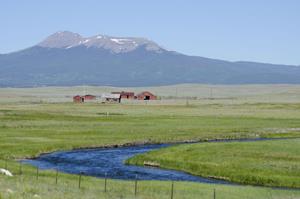
The severe snow drought that gripped the western United States in this past winter was made four times more likely by human-caused climate change, according to a new study led by researchers at Colorado School of Mines and published July 20, 2026 in the Proceedings of the National Academy of Sciences (PNAS).
Adrienne Marshall

Adrienne Marshall, the study's lead author, is a computational hydrologist. She is an assistant professor of geology and geological engineering at Colorado School of Mines.
Legal Disclaimer:
EIN Presswire provides this news content "as is" without warranty of any kind. We do not accept any responsibility or liability for the accuracy, content, images, videos, licenses, completeness, legality, or reliability of the information contained in this article. If you have any complaints or copyright issues related to this article, kindly contact the author above.
